

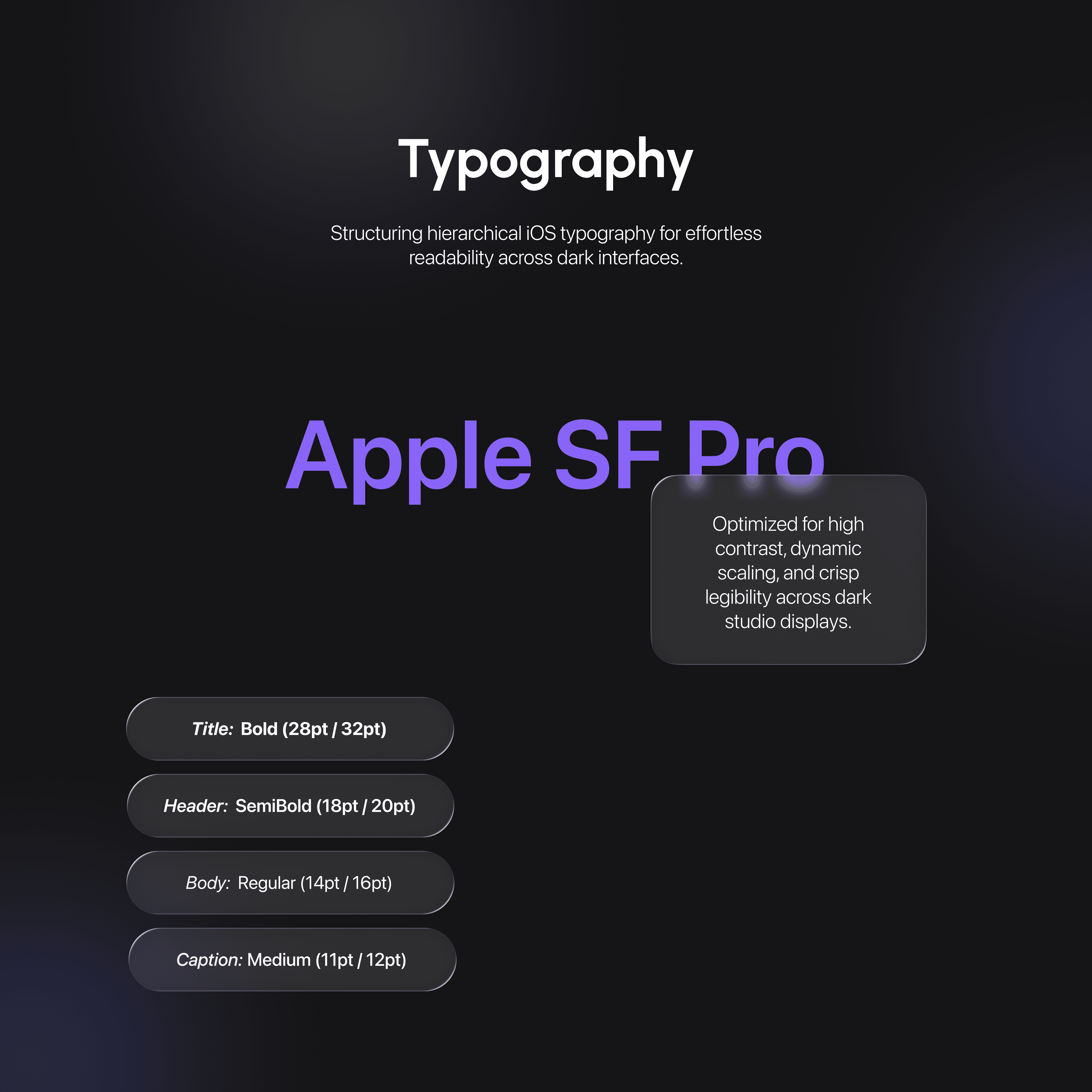
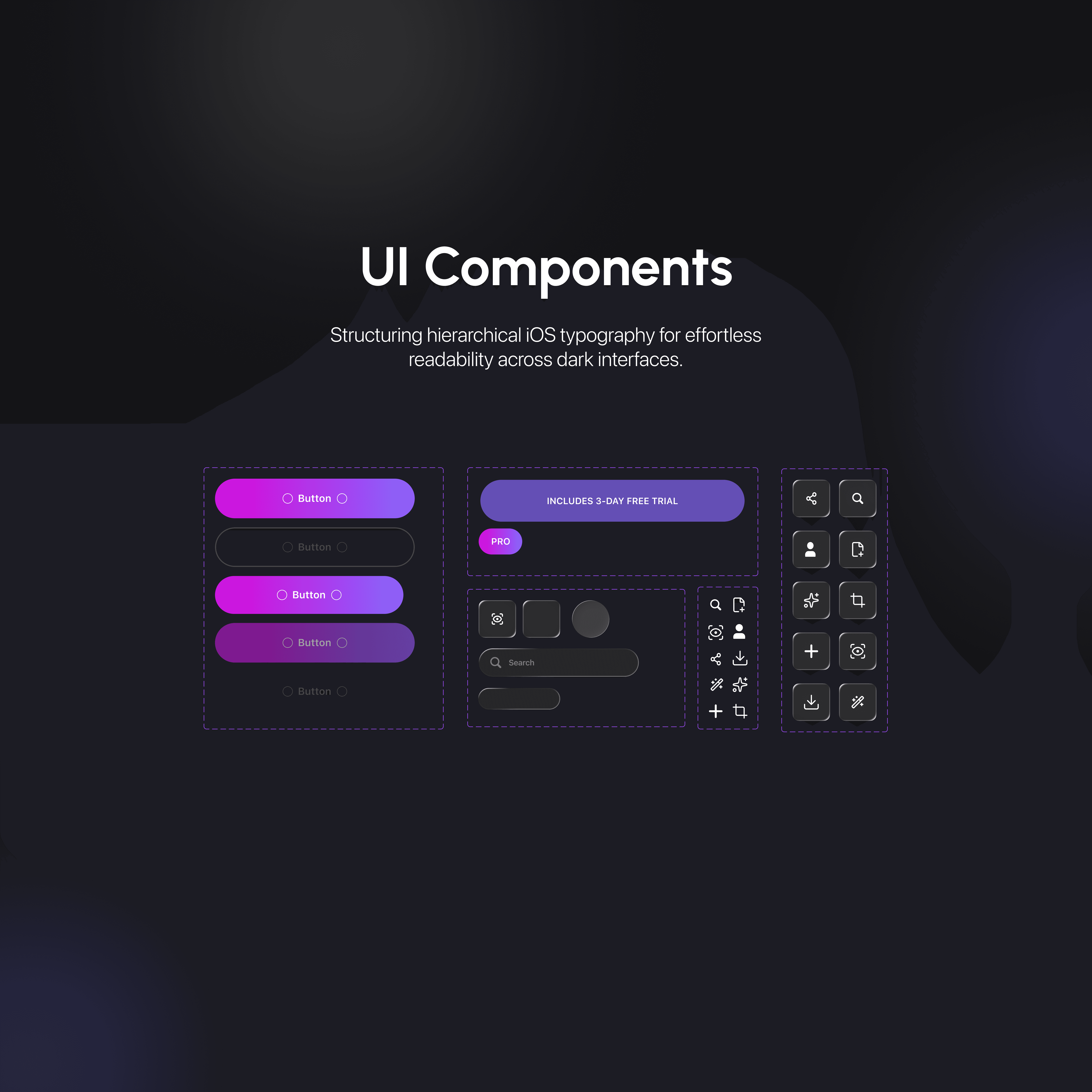
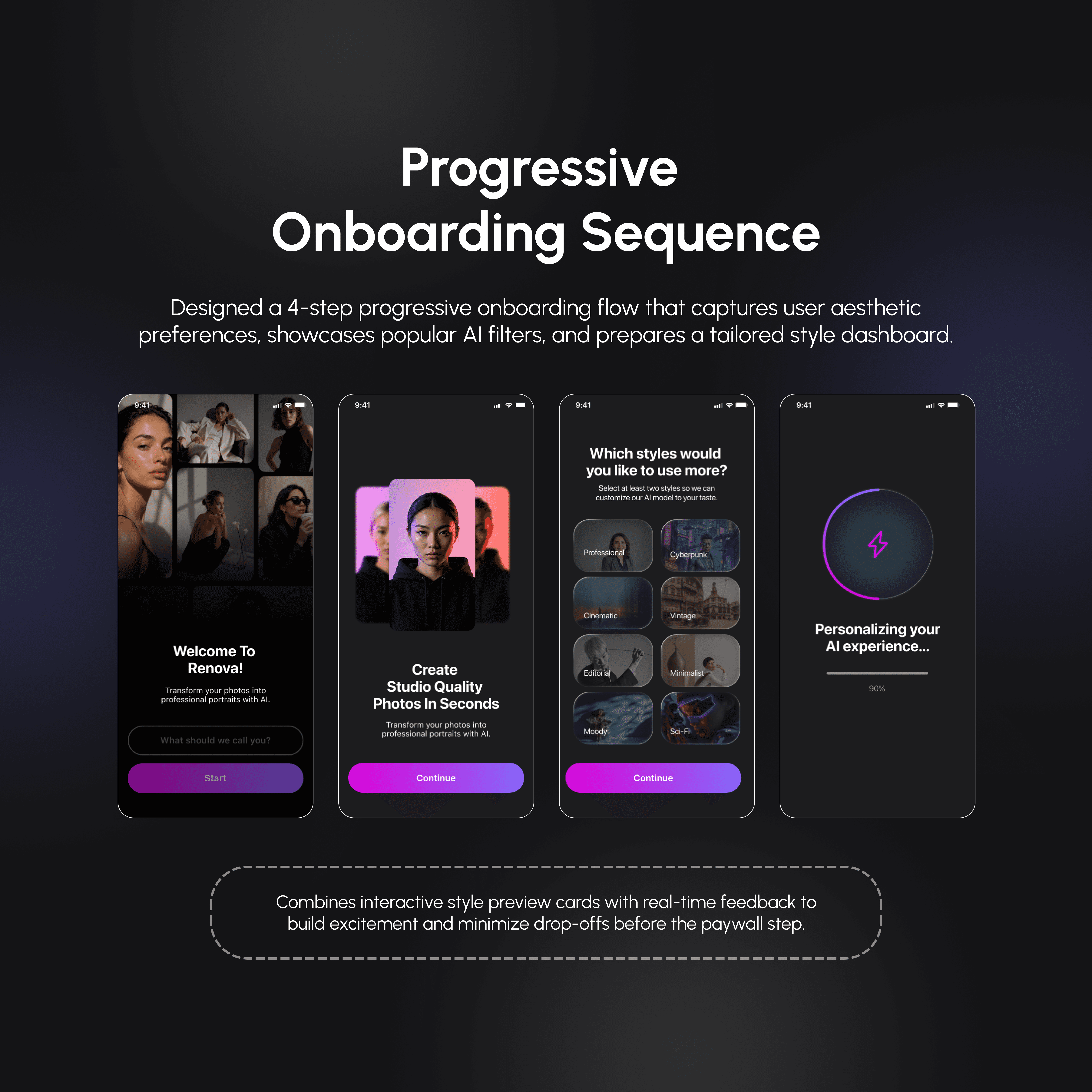
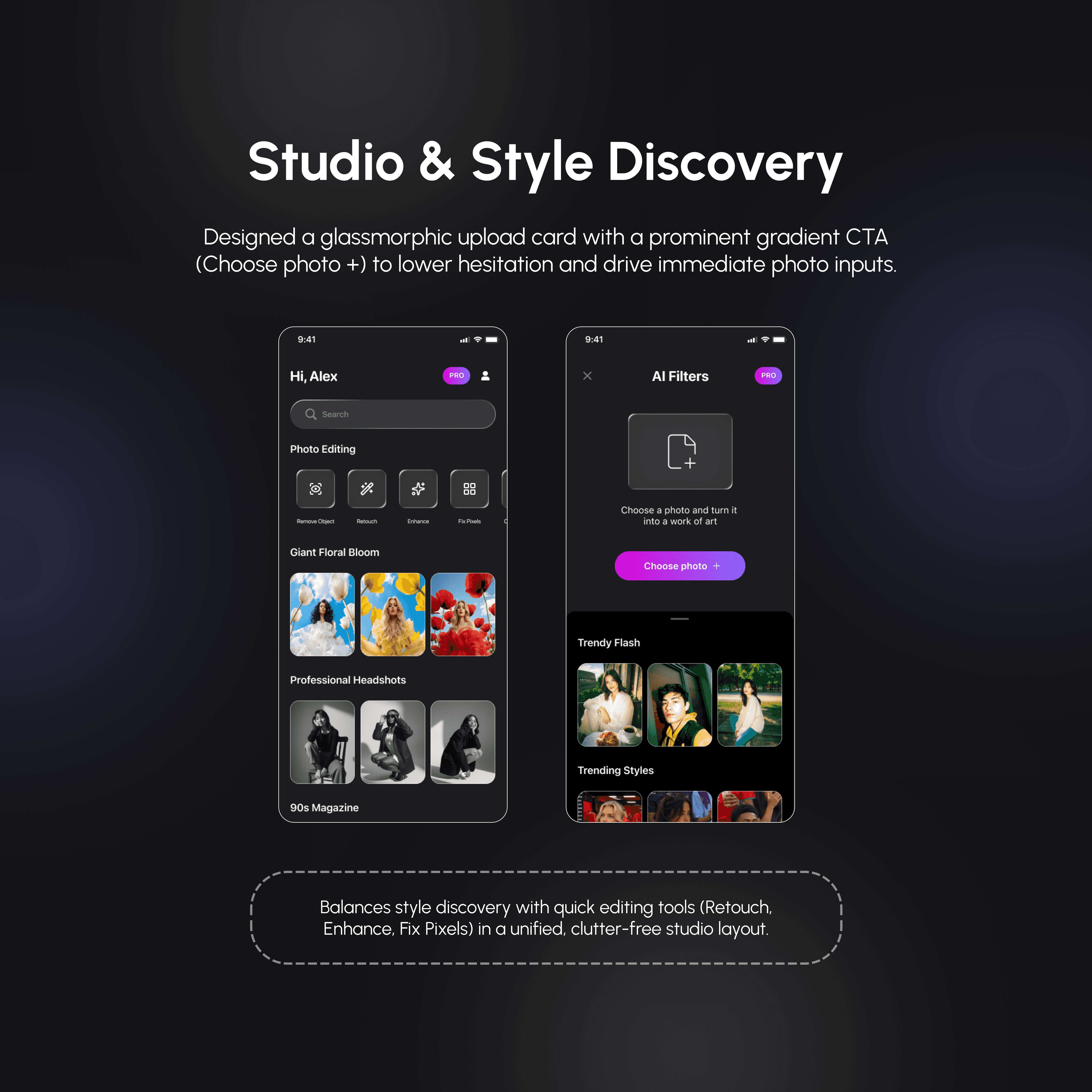
Deep dark surfaces bring focus, while vibrant AI gradients and glassmorphism guide user interaction with effortless clarity.



AI-Assisted Product Exploration
01 ) Defining the Direction
I began by exploring the core idea behind Renova and identifying the experience the product should offer. The goal was to establish a clear foundation before moving into detailed interface design.
02 ) Exploring with Claude
I used Claude to rapidly explore different concepts, user flows, and interaction patterns. This allowed me to turn early ideas into something tangible and experiment with different approaches without committing too early to a single solution.
03 ) Building the First Prototype
I developed an early interactive prototype with Claude to understand how the product could behave in a real user flow. The prototype helped me evaluate the structure, navigation, and key interactions while giving me a clearer sense of the overall experience.
04 ) Learning from the Prototype
The prototype became a way to question and refine the initial direction. As I explored the experience, I identified areas that could be simplified, improved, or approached differently.
Rather than reproducing the AI-generated prototype directly, I used what I learned from it to inform the next stage of the design.
05 ) Evolving the Design
The current screens are not a direct reproduction of the initial prototype. I reworked the interface based on my own design decisions, refining the visual language, structure, and user experience as the concept evolved.
Renova is still an ongoing exploration, with the design continuing to develop through iteration and experimentation.
Process:
Concept → AI Exploration → Prototype → Learn → Redesign → Iteration